
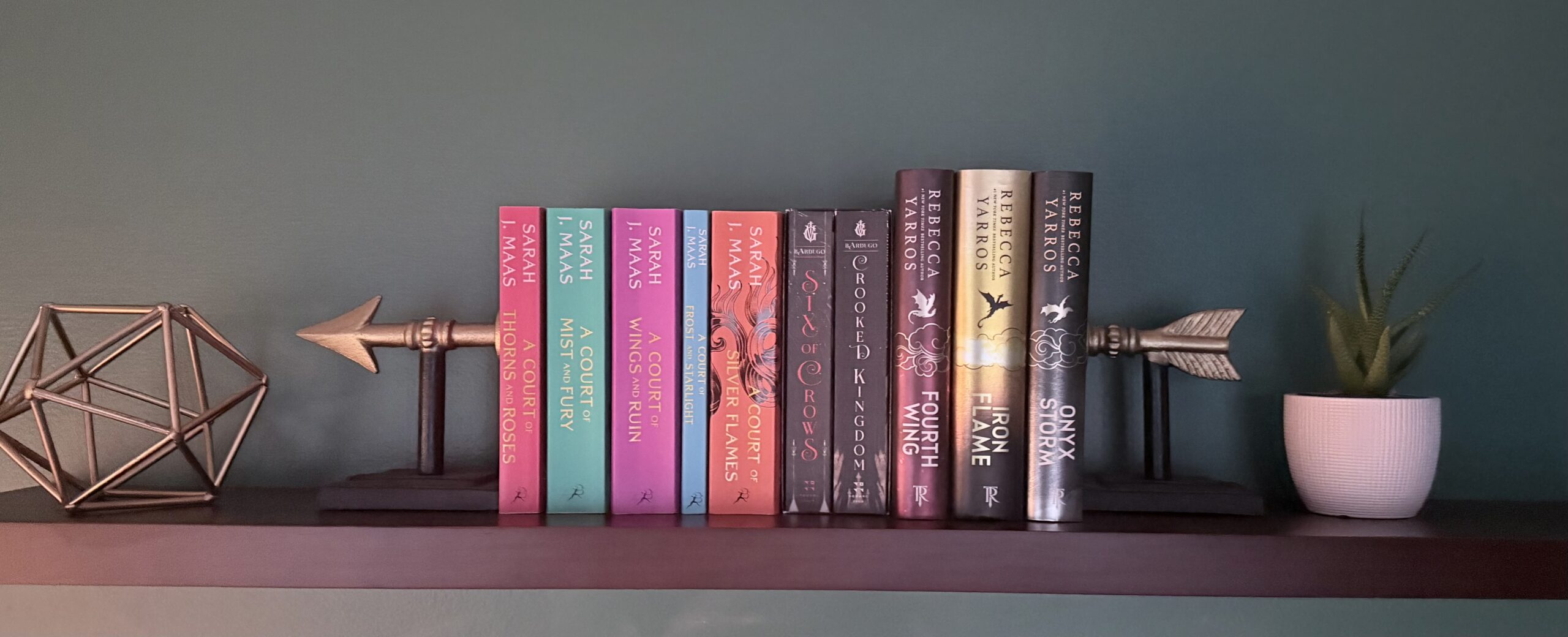
It is a truth universally acknowledged that a young woman in possession of a great many books must be in want of a book boyfriend. Whether it’s taciturn Mr. Darcy (Pride & Prejudice), brooding Xaden (Fourth Wing), or charming Rhysand (A Court of Thorns and Roses), those of us who love a good romance are ride-or-die for our favorite male leads. One might then be tempted to conclude that the traits we love in these fictional men are the same traits we seek in our partners.
Nothing could be further from the truth.
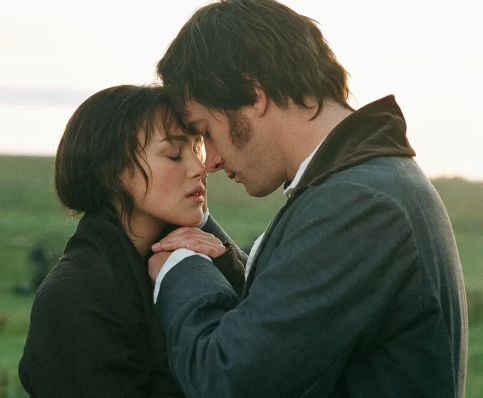
From Pride & Prejudice, to Twilight, to Six of Crows, we’re accustomed to leading men with, shall we say, antisocial tendencies.
In actuality, I suspect that if I met any of these men out in the real world, I’d likely call the cops on them. They are moody and prone to violence. They have tragic backstories and loads of unresolved trauma for which they have never sought therapy. Their love for the female protagonist often borders on unhealthy obsession, resulting in stalker-ish behavior.
Take, for example, some of the most popular tropes of the Romantasy (a portmanteau of “romance” and “fantasy”) genre.
Favorite Romantasy Tropes
- Enemies-to-lovers, where the primary love interests are sworn enemies on opposing sides of a major conflict, and the female protagonist sees no morally redeeming qualities in her soon-to-be lover.
- Grumpy-sunshine, where one of the main romantic protagonists is a bubbly optimist (typically the woman) and one is a desolate raincloud of gloom and despair (typically the man).
- Who-did-this-to-you, where the female protagonist suffers a serious wound at the hands of an adversary, and the love interest vows death and vengeance upon said adversary. (They usually succeed).
- Forced-proximity, where the two romantic leads have no choice but to spend time together, often due to some amount of coercion on the part of the male lead.
- Fated-mates, where the female protagonist does not have any say at all over who she ends up with because her match had been foretold by some undisclosed prophecy or deity.
The thought of entering into a relationship with someone who is morally reprehensible, rude, vengeful, and manipulative, let alone having no say in the matter, sounds more like a horror story than a fairytale romance. So why have these books and their love interests captured the hearts (and wallets) of so many ardent fans?
I believe it’s because these stories and tropes speak to smaller, more subtle longings. They give us big, hyperbolic solutions to the things in our everyday lives that scare us most. Let’s revisit our list from before:
- Enemies-to-lovers: The promise of going from hatred and disdain to love and compassion feels impossibly hopeful in a hyper-polarized world, where every minute of every day, social media algorithms are all too ready to give you somebody new to hate and be hated by.
- Grumpy-sunshine: Opposites attract, or at least that’s what they say. In reality, being in a relationship with someone very different from yourself comes with a lot of frustration. It’s not exciting and sexy. It’s a lot of halting conversation and hard-won compromise. But in a world of adventure and magic, these sharp differences are easily smoothed over by the sheer power of love (or perhaps trauma-bonding) just in time for the next action sequence.
- Who-did-this-to-you: Oh, to be a romantasy heroine, for whom karma always delivers. Better yet, this karma usually arrives in the form of a hot guy with a sword and a six pack. In the real world, we don’t typically wish a beheading upon the antagonists in our own stories, but in the world of romantasy, no punishment is too severe to avenge a suffering heroine.
- Forced-proximity: This trope is particularly irresistible to anyone who’s ever thought, “If they just got to know me, I’m sure they’d come around.” In romantic fiction, the trapped woman always ends up falling in love with the man who has ensnared her, and in the end, we’re glad they were forced to get to know one another. In real life, that’s called Stockholm Syndrome, and it’s generally considered a bad thing.
- Fated-mates: When nothing is certain but death and taxes, this trope feels refreshingly reassuring. No matter what happens, the main character need never fear a messy breakup or divorce because the universe has pre-ordained her eternal happiness. We’d all rest easier if real life came with such assurances.
When viewed through this lens, it’s no wonder that the emotionally stunted male love interests in romance and fantasy books have us kicking our feet in the air and squealing with delight, even if what they’ve done is morally grey at best and objectively creepy at worst. In my own life, I’m thrilled to be married to an optimistic extrovert who handles his problems like an adult. But when I pick up my current romantasy read, I’m not looking for emotional stability and competency with a dishwasher. I don’t want helpful suggestions for how to deal with Becky from Accounting. I want the simple pleasures of a man pining so hard he’s practically coniferous and a villain’s head on a pike.
Trusting the Author
I know I will be given these things because of the trust I place in the women who author these stories. No matter what the male lead says or does over the course of the book, I know that Sarah J. Maas, Rebecca Yarros, Rachel Gillig, and Ali Hazelwood would not lead me astray. They’re perfectly aware of what I want out of their writing – emotional connection, cosmic security, and above all else, a happy ending. Their ability to consistently deliver is why they are experts at their craft. The fantasy feels safe, even as the stakes are life-or-death, because it’s penned by women who know the consequences of these dynamics in real life. At the end of the day, they want to make me fall in love with their fictional men just as completely as their protagonists – and I choose to let them.